
What Is a THC Flower? A Simple Explanation for Beginners

by Uniq Cannabis | September 22, 2026
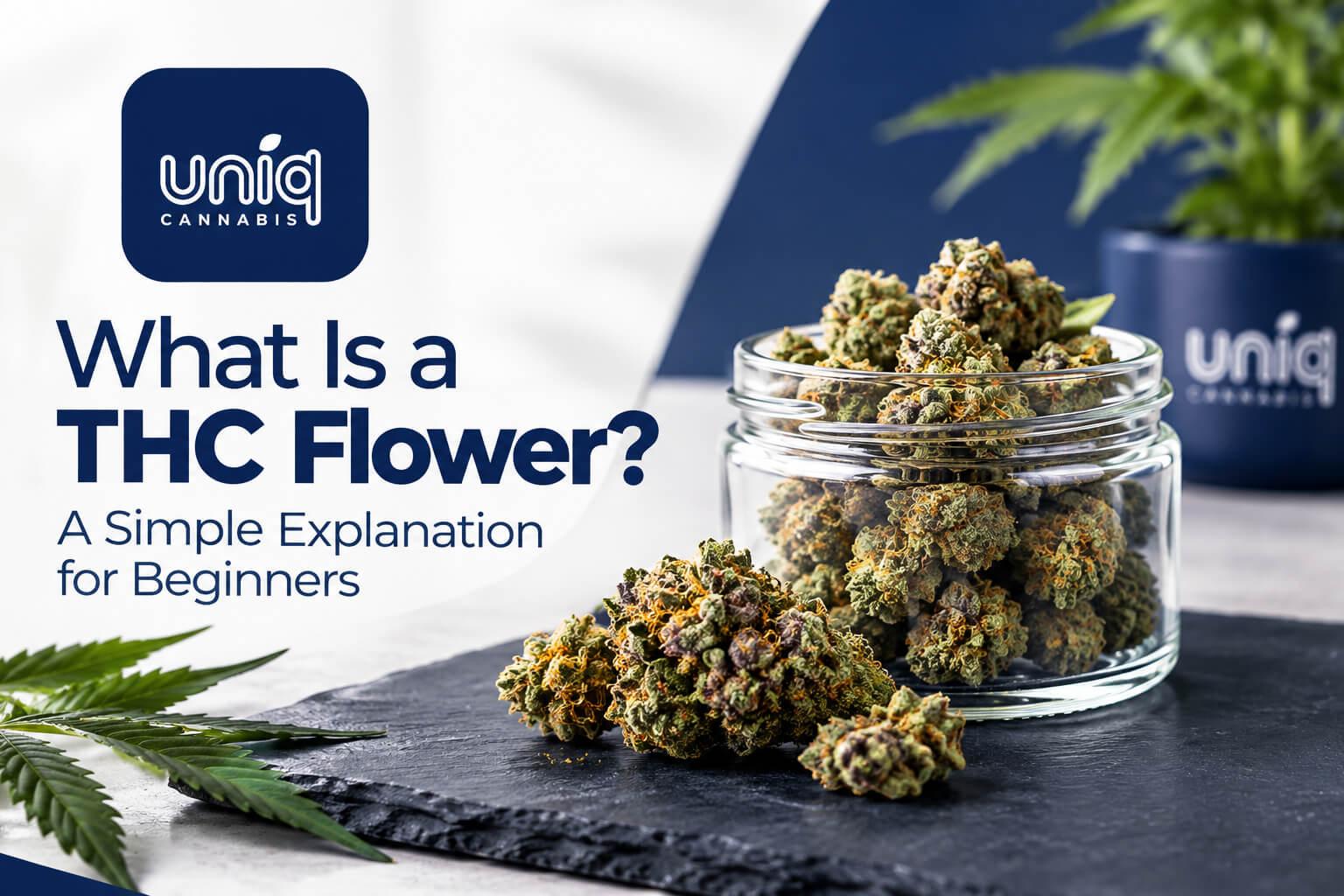
If you are new to cannabis, the term “THC flower” can sound confusing. In simple terms, THC flower is cannabis flower that contains THC and other natural compounds. It is one of the most traditional forms of cannabis available. However, THC flower is more than just a percentage on a label.
This guide explains what THC flower is, what it contains, how potency works, and how beginners can evaluate it. Keep reading to understand the basics before choosing cannabis flower.
Understanding Cannabis Flower
Cannabis flower is the dried flowering part of the cannabis plant. It is commonly called flowers, bud, weeds, or marijuana. The flower contains cannabinoids, terpenes, and other plant compounds that contribute to its characteristics.
The most important cannabinoid in the THC-rich flower is tetrahydrocannabinol, commonly called THC. THC is the primary intoxicating cannabinoid in cannabis. CBD is another well-known cannabinoid, but it does not produce the same intoxicating effects as THC.
Cannabis flower is usually harvested, dried, cured, tested, and packaged before reaching a licensed dispensary. The final product may appear as whole buds or smaller pieces of flower. Its aroma, appearance, texture, cannabinoid profile, and terpene profile can vary considerably.
How THC Flower Differs from Other Cannabis Products:
THC flower is different from products such as edibles, tinctures, oils, and concentrates because the plant material remainslargely intact. Concentrates, for example, process cannabis flower or other plant material into products with much higher cannabinoid concentrations.
Edibles also differ because the cannabinoids are consumed through food or drinks. Their effects can take longer to appear and may last longer than inhaled cannabis.
Flower is commonly smoked or vaporized. However, the method of consumption changes how quickly cannabis effects can begin and how the body receives THC.
What Makes Flower THC-Rich?
THC-rich flower develops through the plant's natural cannabinoid production. Most cannabinoids are concentrated in tiny structures called glandular trichomes. These structures are especially abundant on cannabis flowers.
During flowering, cannabis plants produce cannabinoid acids such as THCA. When heat is applied, THCA can undergo decarboxylation and form THC. This process helps explain why raw cannabis flower and consumed cannabis can have different cannabinoid forms.
The genetics of a cultivar also influence its cannabinoid profile. Growing conditions, harvesting, drying, and storage can affect the final product as well.
THC, THCA & Cannabinoids Explained
THC and THCA are closely related, but they are not the same compound. THCA stands for tetrahydrocannabinolic acid. It is an acidic precursor to THC and occurs naturally in fresh cannabis flower.
THC, by contrast, is the cannabinoid associated with cannabis's intoxicating effects. THCA does not produce the same intoxicating effect as THC in its natural acidic form.
This distinction matters when reading a cannabis label. A product may list THC, THCA, and total THC separately. Therefore, beginners should avoid assuming that every number on the package represents the same thing.
How THCA Becomes THC:
Heat can convert THCA into THC through a chemical process called decarboxylation. Smoking and vaporizing provide enough heat for this transformation to occur.
Drying, aging, and heating can also influence cannabinoid chemistry over time. However, the exact conversion depends on temperature, time, and the product itself.
That is why understanding THCA helps make sense of THC flower labels. The flower may contain mostly acidic cannabinoids before consumption, while heating changes some of those compounds into their neutral forms.
What CBD and Other Cannabinoids Do:
THC is only one cannabinoid found in cannabis. Flower may also contain CBD, CBG, CBC, CBN, and other cannabinoids in smaller amounts.
CBD does not cause the same intoxicating effects as THC. Other cannabinoids can also contribute to the chemical profile of a cultivar. However, researchers are still studying how these compounds interact and how much each contributes to the overall experience.
Therefore, THC percentage should not be treated as the only useful piece of information. A broader cannabinoid profile can provide additional context when comparing products.
What's Inside THC Flower?
Trichomes are tiny structures that appear on the surface of cannabis flowers. Under magnification, they can look like small crystals or mushroom-shaped glands.
These structures are important because glandular trichomes produce and store cannabinoids and terpenes. They are especially concentrated around the female cannabis flower.
When people ask, “What are trichomes in cannabis flower?” this is the key answer: trichomes are microscopic resin-producing structures that contain many of the compounds that make cannabis chemically distinctive.
Terpenes, Aroma & Flavor:
Terpenes are aromatic compounds found throughout nature. In cannabis, they contribute strongly to the plant's aroma and flavor.
Different cultivars can have different terpene profiles. As a result, one flower may smell citrusy, while another may have earthy, pine-like, floral, or spicy notes.
Terpenes can help shoppers understand the sensory character of flowers. However, research into how specific terpene combinations affect the overall cannabis experience is still developing. Therefore, terpene information should be complemented, rather than replace other product information.
Pistils, Buds and Other Flower Parts:
Cannabis flower contains several visible plant structures. The dense bud contains bracts and other floral tissues, while pistils can appear as thin hair-like structures.
Sugar leaves may also remain around some buds after trimming. Trichomes cover many of these surfaces and give quality flowers its familiar frosty appearance.
Appearance alone, however, cannot confirm potency or safety. Laboratory testing and proper product information provide more reliable information.
Understanding THC Flower Potency
THC percentage shows the concentration of THC in a cannabis product by weight. For example, a label showing 20% THC indicates that THC makes up approximately 20% of the product's measured weight under the applicable testing method.
However, the THC percentage does not tell you everything about the product. It does not fully describe terpene content, other cannabinoids, freshness, or the way an individual may respond.
Michigan rules also require total THC and total CBD to be reported in percentages for marijuana flowers and concentrates.
Does Higher THC Mean Better Flower?
Not necessarily. A higher THC percentage means a higher measured concentration of THC. It does not automatically mean better quality, better flavor, or a better experience.
Flower quality can involve several factors, including freshness, aroma, terpene profile, appearance, cultivation practices, curing, and laboratory testing. Therefore, comparing products only by THC percentage can leave out important information.
Recent research also highlights why label numbers deserve careful attention. One 2025 study tested 178 cannabis flower products purchased from 52 Colorado dispensaries. Only 56.7% of the flower samples fell within the study's ±15% labeling accuracy range.
This does not mean every legal product has an inaccurate label. Instead, the study shows why consumers should consider complete product information rather than focusing on one number.
How to Read a THC Flower Label:
A cannabis label can provide several useful details. Depending on the product and applicable rules, you may find:
1. THC concentration
2. THCA concentration
3. Total THC
4. CBD concentration
5. Net weight
6. Harvest information
7. Product or package identification
8. Testing information
9. Test batch information
10. Applicable warnings
11. Required cannabis symbols
Michigan's labeling guidance includes information such as THC and CBD concentration, net weight, harvest information when applicable, testing facility information, and required warnings.
When reading a label, start with the product name and type. Then check the cannabinoid information, package date, or harvest information when available, and testing details.
How to Choose Quality THC Flower
Good cannabis flower should have a reasonably fresh appearance. Look for intact buds with visible trichomes and a healthy overall structure.
Avoid judging quality from color alone. Genetics and cultivation methods can create many natural color differences.
The flower should also avoid obvious signs of contamination or deterioration. Unusual discoloration, visible mold, or an unpleasant smell should be treated as warning signs.
Check Aroma and Terpene Profile:
Aroma can provide useful information about the flower's terpene profile. Fresh cannabis often has a noticeable natural scent, although the exact aroma depends on the cultivar.
Read the available terpene information when it is provided. It can help you understand whether a product has citrus, floral, herbal, earthy, pine, or other aromatic characteristics.
However, aroma is not a substitute for laboratory testing. A pleasant smell alone does not confirm potency or safety.
Consider Freshness and Curing:
Drying and curing help prepare cannabis flower for storage and use. Proper post-harvest handling can influence moisture, aroma, texture, and cannabinoid stability.
Very dry flowers may crumble easily and lose an aroma. Flower with excessive moisture can create conditions that encourage microbial problems.
Therefore, freshness involves balance. The goal is a flower that maintains its structure, aroma, and overall quality without excessive dryness or moisture.
Check Lab Testing and Product Information:
Laboratory testing provides information that you cannot determine simply by looking at a bud. Depending on the market and product, testing can cover cannabinoids and other safety-related requirements.
For Michigan consumers, purchasing through licensed establishments provides an important layer of regulatory oversight. The Michigan Cannabis Regulatory Agency regulates adult-use marijuana establishments and licensees.
You can also use Michigan's official license verification system when you want to confirm an establishment's licensing information.
THC Flower: Strains, Cultivars & Profiles
You will often see cannabis flower described as indica, sativa, or hybrid. These terms are widely used in the cannabis market to describe different types or backgrounds of cannabis.
However, these labels do not provide a complete scientific description of a flower's chemical profile. Two products with the same broad category can have very different cannabinoid and terpene profiles.
For that reason, looking at the actual product information can provide more useful detail than relying on a category name alone.
Why THC Percentage Isn't the Whole Story:
THC percentage tells you about one important cannabinoid. It does not describe every compound in the flower.
For example, two products could have similar THC percentages but different terpene and minor-cannabinoid profiles. They could also differ in freshness, cultivation methods, and curing.
So, when comparing flowers, consider the entire product profile rather than searching for the largest THC number.
How Terpenes and Cannabinoids Help Compare Flower:
Cannabinoids help describe the chemical profile of a product. Terpenes add another layer by describing aroma and flavor characteristics.
Together, these details can help shoppers compare products more thoughtfully. Scientific research has identified many cannabinoids and terpenes in cannabis, although researchers are still working to understand how these compounds interact in humans.
How Is THC Flower Used?
Smoking is one of the traditional ways people consume cannabis flower. It can involve a joint, pipe, or other smoking device.
However, smoking cannabis exposes the lungs to smoke and combustion byproducts. Cannabis use can also affect memory, attention, coordination, and reaction time.
For that reason, consumers should understand the potential risks associated with inhaling cannabis smoke.
Vaping Flower:
Flower can also be used with devices designed specifically to vaporize cannabis. Vaporization heats the material rather than burning it in the same way as traditional smoking.
However, vaping cannabis is not risk-free. The safety of a vaping product can depend on the device, material, formulation, and contaminants.
The CDC notes that cannabis can affect brain function and that higher THC concentrations can produce stronger effects.
Using Flower in Other Cannabis Products:
Cannabis flower can also serve as a starting material for other cannabis products. Processed cannabis can appear in concentrates, oils, tinctures, and infused products.
However, these products can differ significantly in potency and how the body receives THC. Edibles, for example, can have delayed and sometimes unpredictable effects.
For beginners, understanding the product type is important before comparing potency numbers across different categories.
Choosing THC Flower for the First Time
First-time shoppers do not need to understand every cannabis term before choosing a product. Start with the basics and compare products using clear information.
A simple checklist can help:
1. Check the THC and cannabinoid information.
2. Look at the terpene profile when available.
3. Review the package and test information.
4. Consider freshness and appearance.
5. Ask questions about the cultivar and product profile.
6. Choose a licensed retailer.
Most importantly, avoid assuming that the highest THC percentage is automatically the right choice.
Choosing a Comfortable THC Potency:
There is no single THC percentage that works for every person. Individual responses can vary based on experience, tolerance, product potency, consumption method, and other factors.
For someone new to cannabis, understanding potency is more important than chasing a specific number. Higher THC concentrations can produce stronger effects, and the CDC notes that greater THC concentration is associated with stronger effects on the brain.
If you are inexperienced, discuss product information with a licensed dispensary professional. Also avoid driving or operating machinery after using cannabis.
How to Store THC Flower Properly
Storage conditions can affect cannabis flower over time. Light, temperature, oxygen, and moisture can influence cannabinoid stability and the condition of dried cannabis.
Research has found that light and storage temperature can contribute to cannabinoid degradation. Therefore, keeping flowers away from excessive heat and light can help preserve their quality.
Avoid leaving cannabis in hot cars, direct sunlight, or places with large temperature changes.
Keeping Cannabis Fresh:
Freshness is not simply about keeping flowers as dry as possible. Excessive dryness can reduce aroma and make flower brittle, while excess moisture can create other quality problems.
A suitable airtight container can help limit exposure to air and environmental changes. Keep the container in a cool, dark location.
Safe Storage at Home:
Cannabis should always be stored securely and away from children and pets. Keeping products in their original labeled packaging can also help preserve important product information.
For Michigan consumers, cannabis products carry required warnings and labeling information. These requirements help communicate important safety and product details.
THC Flower in Michigan: What Shoppers Should Know
Michigan allows adult-use marijuana for adults 21 years of age and older. The state's Cannabis Regulatory Agency regulates adult-use marijuana establishments and licensees.
Michigan law also places restrictions on marijuana use. For example, the state does not authorize operating a vehicle or machinery under the influence of marijuana or consuming marijuana in public.
Because cannabis laws can change, consumers should check current Michigan CRA information for the latest requirements.
Buying From a Licensed Michigan Dispensary:
Buying from a licensed establishment gives consumers access to products sold within Michigan's regulated cannabis system. The CRA oversees adult-use establishments and uses a statewide tracking system for marijuana inventory.
Before purchasing, check that the retailer is properly licensed. Michigan provides an online license verification tool for adult-use establishments.
This is especially useful when you are unfamiliar with a retailer.
Understanding Michigan Cannabis Labels:
Michigan cannabis labels can provide several pieces of information about a product. Depending on the product, this may include THC and CBD concentrations, net weight, harvest information, testing information, and required warnings.
These details can help consumers understand what they are purchasing. Therefore, taking a few moments to read the label is worthwhile.
THC Flower FAQs
Is THC Flower the Same as Weed?
Generally, yes. “Weed,” “bud,” “marijuana,” and “flower” are common terms used to describe cannabis. THC flower specifically emphasizes cannabis flower that contains THC.
The exact terminology can vary depending on the context. “Cannabis flower” is the more neutral product term, while “weed” and “marijuana” are common informal terms.
What Is the Difference Between THC Flower and CBD Flower?
THC flower contains meaningful amounts of THC, while CBD flower is generally cultivated to contain higher CBD levels and very low THC levels within applicable legal definitions.
The two products can look similar because both are cannabis flowers. The cannabinoid profile is the major distinction.
Always check the product label rather than relying on appearance.
Is Higher THC Flower Stronger?
Higher THC concentration generally means more THC is present by weight. It can therefore produce stronger intoxicating effects, although the experience depends on multiple factors.
The CDC notes that greater THC concentration can produce stronger effects on the brain.
Higher THC also does not automatically mean higher quality.
What Should Beginners Look for in THC Flower?
Beginners should focus on clear product information rather than one feature. Check THC, other cannabinoids, terpene information, freshness, testing details, and the product label.
It can also help to ask questions at a licensed dispensary. A knowledgeable budtender can explain the differences between available products without requiring you to know every cannabis term.
How Long Does THC Flower Stay Fresh?
There is no single expiration period that applies to every cannabis flower product. Storage conditions, packaging, moisture, temperature, light, and the starting quality all affect how long a flowermaintains its characteristics.
Research shows that prolonged exposure to light, temperature, and air can contribute to cannabinoid degradation. One four-year study found substantial THC degradation under certain storage conditions.
Therefore, think of freshness as a gradual process rather than a fixed date.
Can You Vape THC Flower?
Yes. Flower can be used with vaporizers designed specifically for dry cannabis flower.
However, vaping cannabis is not risk-free. Product quality, device characteristics, temperature, and individual factors can influence the experience.
How Do You Read THC Flower Potency?
Start by finding the THC and total THC information on the label. Then check whether THCA and other cannabinoids are listed separately.
Remember that the THC percentage represents concentration by weight. It does not describe the entire chemical profile of the flower.
Recent independent research also shows why consumers should interpret potency numbers carefully. A 2025 study found that only 56.7% of the tested flower products met its ±15% label-accuracy threshold.
Explore THC Flower at UNIQ Cannabis
Understanding THC flower makes it easier to compare cannabis products with confidence. Instead of focusing on THC percentage alone, consider the complete product profile, including cannabinoids, terpenes, freshness, and available testing information.
At UNIQ Cannabis, shoppers can explore cannabis flower and other cannabis products. Product availability, cannabinoid percentages, terpene profiles, and inventory may change, so always review the current product information before making a purchase.