
CBD vs. THC: What’s the Difference? A Beginner’s Guide

by Uniq Cannabis | September 22, 2026
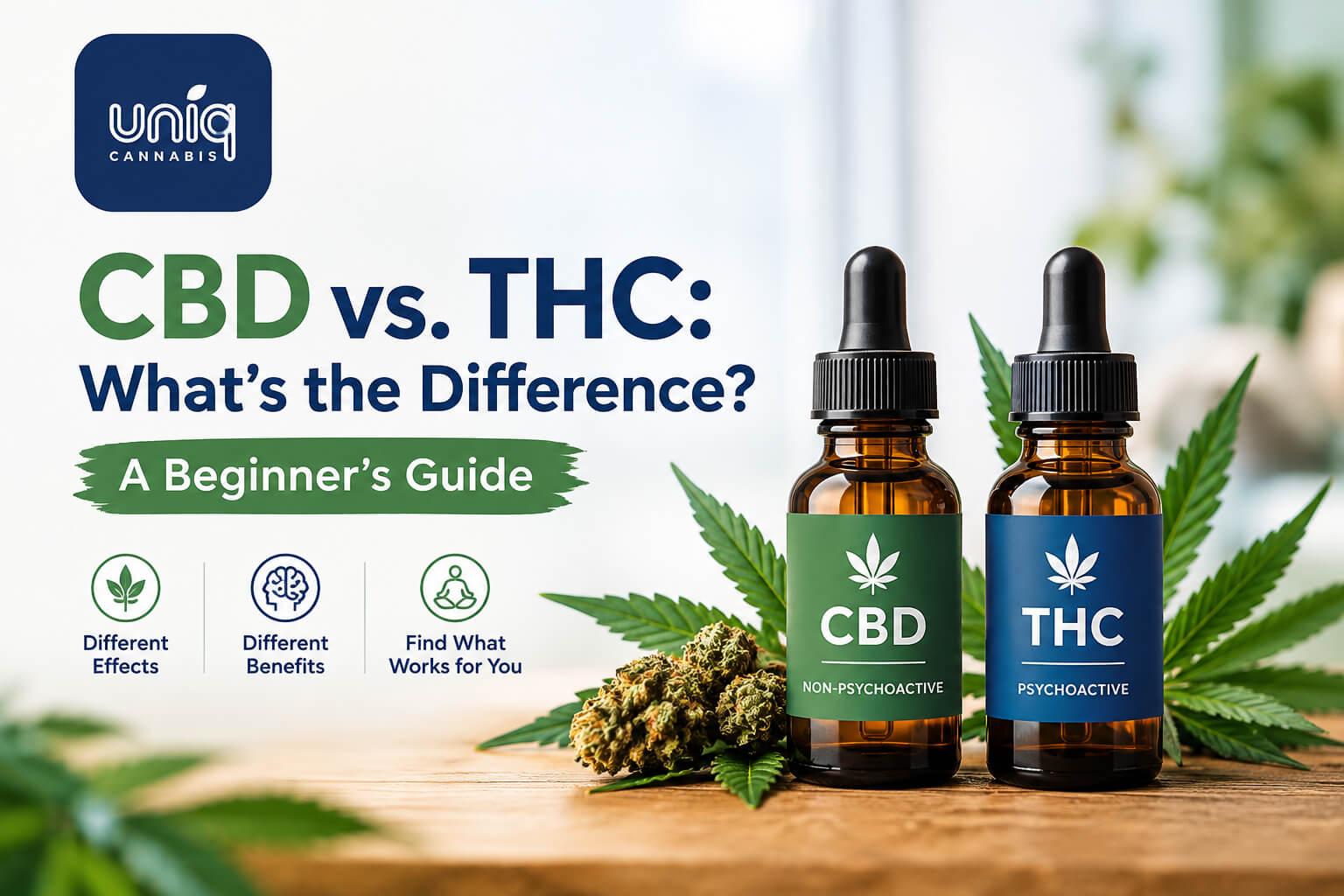
If you are new to cannabis, CBD and THC can seem confusing. Both are cannabinoids, yet they can affect the body differently. THC can cause a high, while CBD does not cause intoxication by itself.
This guide explains CBD vs. THC for beginners, including effects, products, potency, safety, drug testing, and Michigan rules. Keep reading to understand the key differences before exploring cannabis products.
Two Major Cannabinoids, Two Different Experiences
Cannabinoids are compounds found naturally in the cannabis plant. CBD and THC are two of the most widely discussed cannabinoids. Cannabis contains many other cannabinoids as well, including CBG and CBN.
CBD stands for cannabidiol. THC stands for tetrahydrocannabinol. Although they come from the same plant family, they do not create the same experience.
The biggest difference is simple. THC can cause intoxication, while CBD does not cause a high by itself. The CDC describes CBD as non-impairing, although researchers continue studying its effects.
Where Are CBD and THC Found?
CBD and THC can occur naturally in cannabis plants. Their concentrations vary between cultivars and products. Different products can therefore have very different cannabinoid profiles.
You may find CBD or THC in products such as:
1. Cannabis flower
2. Pre-rolls
3. Vapes
4. Gummies
5. Other edibles
6. Concentrates
7. Tinctures
8. Topicals
Some products contain mostly THC. Others focus on CBD. Some contain both cannabinoids in specific ratios.
Why Are CBD and THC Often Compared?
People often compare CBD and THC because both are cannabinoids. However, their effects and consumer experiences can differ.
For beginners, several questions come up repeatedly. Does CBD get you high? Does THC get you high? Can CBD contain THC? What is the difference between CBD and THC products?
Understanding these basic questions makes cannabis labels easier to read. It also helps shoppers compare products more carefully.
CBD Explained: What Beginners Should Know
CBD, or cannabidiol, is a cannabinoid found in cannabis. Unlike THC, CBD does not cause a high by itself. However, that does not mean CBD is completely risk-free.
Scientists are still studying how CBD affects the body. The FDA also warns that consumer CBD products can carry risks. These risks include drug interactions, drowsiness, and potential liver injury.
Therefore, it is important to separate scientific evidence from marketing claims.
Does CBD Get You High?
One of the most searched questions about CBD is, “Does CBD get you high?”
The answer is no. CBD itself does not cause the intoxicating high associated with THC.
However, some CBD products can contain THC. Full-spectrum products, for example, may contain trace amounts of THC. Therefore, always check the cannabinoid information before purchasing.
How CBD Interacts with the Body
CBD interacts with the body's biological systems in complex ways. Researchers continue to study these interactions. Therefore, many claims about CBD's benefits still require stronger evidence.
The FDA has approved one prescription CBD medication for specific seizure disorders. That approval does not mean that all consumer CBD products have the same evidence or safety profile.
This distinction matters when reading online claims about CBD.
Common CBD Product Formats
CBD appears in many product formats. The available options can vary depending on the retailer and local regulations.
Common CBD formats include:
1. CBD oils and tinctures
2. CBD gummies
3. CBD capsules
4. CBD topicals
5. CBD flower
6. Full-spectrum CBD
7. Broad-spectrum CBD
8. CBD isolate
Each format can have different ingredients and cannabinoid concentrations. Therefore, check the product label before making assumptions.
THC Explained: Understanding the Intoxicating Cannabinoid
THC stands for tetrahydrocannabinol. Delta-9 THC is the primary cannabinoid associated with the traditional cannabis high.
THC can affect perception, attention, memory, and coordination. The experience can vary based on the product, potency, amount consumed, and individual factors.
Why Does THC Cause a High?
THC interacts with cannabinoid receptors in the body and brain. This interaction can produce intoxicating effects.
That is why THC products can feel very different from CBD products. The product format can also affect the experience.
For example, inhaled products and edible products do not necessarily produce effects at the same speed. Therefore, beginners should read product instructions carefully.
How THC Can Affect Perception and Impairment
THC can affect attention, coordination, memory, and perception. These changes can make driving or operating machinery unsafe.
The CDC also reports that highly concentrated THC products are associated with more severe cannabis use disorder symptoms. Therefore, THC potency deserves careful attention.
Common THC Product Formats
THC is available in several cannabis product categories.
Common formats include:
1. THC flower
2. THC pre-rolls
3. THC vapes
4. THC gummies
5. THC edibles
6. THC concentrates
7. THC tinctures
8. THC beverages
Each product can have a different THC concentration. Always check the package for serving and potency information.
CBD vs. THC: The Key Differences at a Glance
If you want a quick CBD vs. THC explained for beginnerscomparison, the table below highlights the main differences.
Feature
CBD
THC
Full name
Cannabidiol
Tetrahydrocannabinol
Intoxicating
No, by itself
Yes
Causes a high
No
Yes
Common products
Oils, gummies, topicals, flower
Flower, vapes, edibles, concentrates
Drug testing concern
Product may contain THC
THC can be detected
Potency labels
Percentage or milligrams
Percentage or milligrams
Product combinations
Can appear with other cannabinoids
Can appear with CBD and other cannabinoids
Main beginner concern
Product quality and possible THC content
Intoxication and impairment
CBD is not considered impairing, while THC can produce intoxicating effects. However, product formulations can vary.
CBD vs. THC: Intoxicating and Psychoactive Effects
The most important difference is intoxication. THC can produce the high associated with cannabis. CBD does not create that same height by itself.
However, the term “psychoactive” can sometimes cause confusion. CBD can interact with the brain and body without producing THC-like intoxication. Therefore, “not intoxicating” is often the clearest way to explain the difference.
CBD vs. THC: How They Interact with the Body
CBD and THC interact with the body's endocannabinoid system in different ways. THC can produce noticeable changes in perception and coordination. CBD does not generally create the same intoxicating experience.
Research also shows that CBD should not automatically be viewed as a way to cancel THC effects. Individual responses can vary, and CBD can have its own effects and risks.
CBD vs. THC: Potency and Product Labels
CBD vs. THC potency can be confusing for beginners. A flower product may display cannabinoid percentages. An edible often shows milligrams per serving.
Concentrates can contain much higher cannabinoid concentrations than flowers. Therefore, comparing numbers only makes sense when you understand what each number represents.
CBD vs. THC: How Their Consumer Uses Differ
CBD and THC can appear in similar product categories. However, the intended consumer experience can differ because THC can cause intoxication.
Rather than focusing only on the product name, review the cannabinoid profile. Then consider potency, serving size, ingredients, and product format.
CBD and THC in Different Cannabis Products
Cannabis flower contains naturally occurring cannabinoids and terpenes. Depending on the cultivar, it may containdifferent levels of THC and CBD.
Pre-rolls provide a ready-to-use flower format. Before choosing one, check the cannabinoid information and potency listed on the package.
CBD and THC in Vapes
Cannabis vapes can contain different cannabinoid profiles. Some focus primarily on THC, while others contain CBD or combination.
Vape products can also use different extracts. These include distillate, live resin, and live rosin. Therefore, check the product information rather than assuming every vape is the same.
CBD and THC in Edibles and Gummies
Edibles contain cannabinoids that you consume orally. Gummies are one of the most familiar examples.
Edibles can differ from inhaled products in how quickly their effects appear. Therefore, beginners should pay close attention to serving information.
CBD and THC in Concentrates and Extracts
Concentrates contain cannabis extracts with concentrated cannabinoids. Examples include live resin, live rosin, wax, and other extract types.
Because concentrates can have high cannabinoid concentrations, potency information is especially important. Always review the product label before using it.
CBD and THC in Tinctures and Topicals
Tinctures are liquid cannabinoid products. Topicals are products designed for application to the skin.
Both categories can contain CBD, THC, or multiple cannabinoids. However, the product's formulation matters. Read the label to understand exactly what it contains.
Products That Contain Both CBD and THC
Some products contain both CBD and THC. These products may use ratios such as 1:1 or 2:1.
However, the ratio does not tell you the complete cannabinoid amount. You should also check the actual milligrams or percentages listed on the package.
Understanding CBD-to-THC Ratios and Product Labels
A CBD-to-THC ratio compares the amount of each cannabinoid. A 1:1 ratio means the product contains equal amounts of CBD and THC.
For example, one serving could contain 5 mg of CBD and 5 mg of THC. A 2:1 ratio could contain twice as much CBD as THC.
The ratio is useful, but it should not replace total potency information.
What Does a 1:1 CBD-to-THC Ratio Mean?
A 1:1 ratio means equal amounts of CBD and THC. However, the total amount still matters.
For example, 2 mg of each cannabinoid is very different from 20 mg of each cannabinoid. Therefore, always check the actual serving amount.
Understanding THC and CBD Percentages
Percentages show cannabinoid concentration. This measurement is common for flowers and certain extracts.
However, percentages do not always tell beginners how much cannabinoid they will consume. For that reason, look for milligrams and serving information when available.
Understanding THC and CBD Milligrams
Milligrams tell you the amount of a cannabinoid. Edibles commonly use milligrams per serving.
When comparing products, distinguish between total package content and the amount per serving. These numbers can be very different.
How to Read Cannabinoid Information on a Product Label
A simple label review can make product comparisons easier.
1. Check the THC amount.
2. Check the CBD amount.
3. Confirm the serving size.
4. Review the ingredient list.
5. Look for batch information.
6. Check available testing information.
7. Review the product's expiration or freshness information when provided.
Clear labeling helps consumers understand what they are buying. It also makes CBD vs. THC product comparisons more meaningful.
CBD vs. THC: Safety, Side Effects, and Responsible Use
CBD is not intoxicating, but it is not risk-free. The FDA identifiespossible concerns such as drowsiness, diarrhea, appetite changes, liver injury, and drug interactions.
Therefore, people taking medications should speak with a healthcare professional before using CBD. This is especially important when multiple medications or substances are involved.
Potential Effects and Risks of THC
THC can cause intoxication and impairment. It may affect attention, memory, coordination, and perception.
The risks can also vary with potency and frequency of use. The CDC reports that highly concentrated THC products are associated with more severe cannabis use disorder symptoms.
Why People Can Respond Differently to CBD and THC
There is no single cannabis experience that applies to everyone. Product potency, consumption method, individual biology, and previous cannabis experience can all matter.
Therefore, avoid using another person's experience as a guarantee. Instead, focus on understanding the product and its label.
CBD, THC, Medications, and Other Substances
CBD can interact with certain medications. The FDA has specifically identified drug interactions as a potential CBD risk.
CBD can also cause drowsiness. Combining substances that affect alertness can increase safety concerns. If you take medication, speak with a healthcare professional before using CBD or THC products.
Why THC-Related Impairment Matters
THC can impair the skills needed for safe driving. Cannabis use can affect coordination, attention, and reaction time.
Therefore, never drive after using an intoxicating cannabis product. Plan transportation before consuming THC.
CBD vs. THC and Drug Testing
Yes. THC exposure can result in a positive drug test.
This matters for people with workplace or other testing requirements. Legal cannabis use does not guarantee a negative test result.
Can CBD Products Contain THC?
Yes. Some CBD products can contain THC. The CDC specifically warns consumers that products labeled as hemp or CBD may contain THC or other unwanted substances.
Therefore, do not assume that every CBD product is completely THC-free. Check the cannabinoid profile and available testing information.
Why Product Testing and Labels Matter
Labels provide important information about a product's contents. Testing can provide additional information about cannabinoid levels and contaminants.
The FDA has reported concerns about inaccurate CBD labeling and product contamination. Therefore, clear labeling and reliable testing information are valuable when comparing products.
CBD vs. THC: What Michigan Consumers Should Know
Michigan permits adult-use marijuana for adults who meet the state's legal requirements. The Cannabis Regulatory Agency regulates adult-use marijuana establishments and licensees.
Michigan's regulatory system covers licensed marijuana businesses and related activities. However, cannabis laws do not mean every use is permitted everywhere.
Hemp-Derived CBD vs. Cannabis Products
Hemp and marijuana can fall under different legal definitions. Federal hemp rules generally use a delta-9 THC threshold to distinguish hemp from marijuana.
However, state rules can differ. Therefore, consumers should check current Michigan requirements when questions about legality arise.
Understanding State and Federal Differences
CBD vs. THC legality can be complicated because federal and state rules do not always work the same way.
Michigan consumers should use current state guidance when checking local cannabis rules. Laws and regulations can change, so older online information may not reflect current requirements.
How to Compare CBD and THC Products as a Beginner
First, identify the primary cannabinoid. Is the product mainly CBD, THC, or a combination?
Then, determine whether the product can cause intoxication. This simple step helps beginners understand the basic difference.
Choose the Product Format
Next, consider the format. Flower, pre-rolls, vapes, edibles, and concentrates all have different characteristics.
Comparing similar product formats can make your research easier. It also helps you focus on meaningful differences.
Compare Potency and Serving Information
Look at THC and CBD percentages or milligrams. For edibles, pay close attention to the amount per serving.
Remember that a higher number does not automatically mean a better product. The goal is to understand what the number means.
Review Ingredients and Cannabinoid Content
Read the complete ingredient list. Then, check the cannabinoid profile and available terpene information.
If the product includes multiple cannabinoids, note their amounts. This gives you a clearer picture than looking at THC or CBD alone.
Check Product Testing and Batch Information
Testing information can provide additional product details. When available, review laboratory or certificate of analysis information.
Also, check the batch information and packaging details. These steps can help you make a more informed comparison.
CBD vs. THC Frequently Asked Questions
What Is the Main Difference Between CBD and THC?
THC can produce a high, while CBD does not cause a high by itself. Both are cannabinoids, but they interact with the body differently.
Does CBD Get You High?
No. CBD does not cause the intoxicating high associated with THC. However, some CBD products can contain THC.
Does THC Get You High?
Yes. THC can produce intoxicating effects. The strength of those effects can vary by product and individual.
Is CBD Psychoactive?
CBD is not considered intoxicating. It does not produce the traditional high associated with THC. However, CBD can still affect the body.
Which Is Stronger, CBD or THC?
There is no simple “stronger” answer. CBD and THC produce different effects, so potency should be considered within the specific product.
Can CBD and THC Be Used Together?
Some products contain both CBD and THC. However, CBD should not be assumed to cancel THC's intoxicating effects.
Understanding CBD and THC at UNIQ Cannabis
Understanding CBD and THC makes cannabis product labels easier to compare. Product categories can include flowers, pre-rolls, vapes, edibles, and concentrates.
UNIQ Cannabis offers a range of cannabis product categories for shoppers to explore. When comparing products, focus on the cannabinoid profile, potency, ingredients, and other available product information.
Compare Flower, Pre-Rolls, Vapes, Edibles, and Concentrates
Each cannabis format has its own characteristics. Flower and pre-rolls provide traditional inhaled options. Vapes and concentrates provide other inhaled formats, while edibles offer an oral option.
The right comparison starts with understanding the product. Then, look at THC, CBD, potency, serving information, and ingredients.